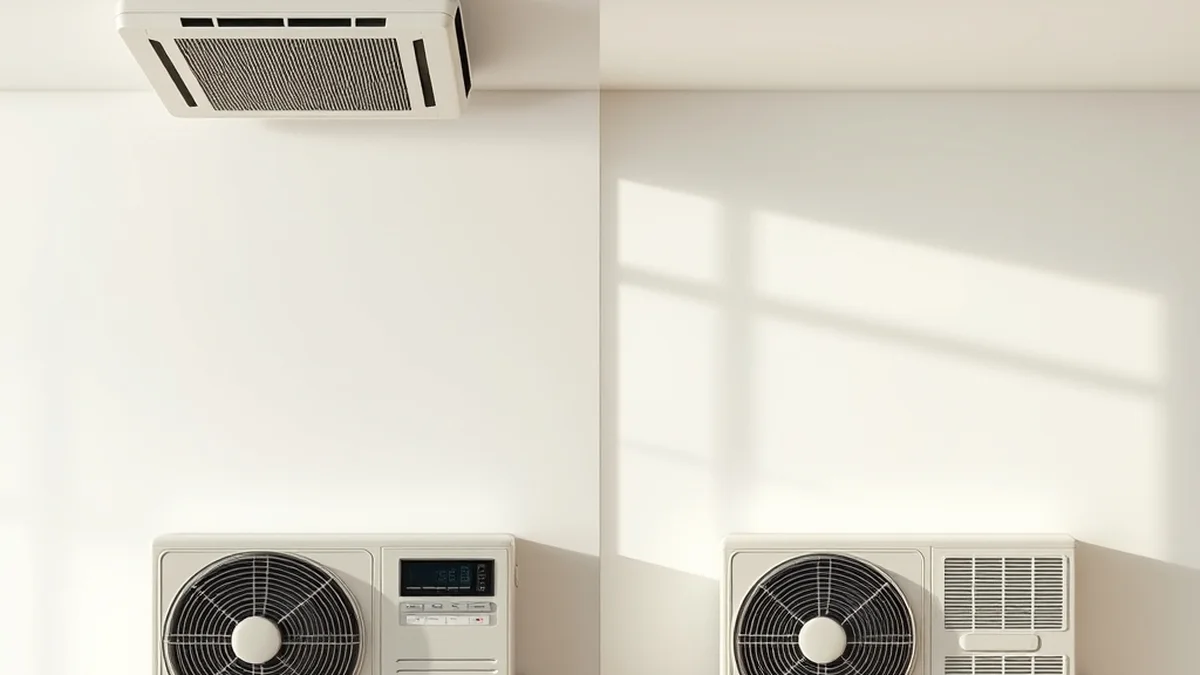
Ductless Ceiling Cassette vs Wall-Mounted Mini-Split: Key Refrigerant Losses
When comparing ductless ceiling cassettes and wall-mounted mini-split systems, understanding refrigerant line set losses is crucial. These losses can significantly impact efficiency and comfort, with line lengths and configurations affecting BTU output. Proper sizing and installation can enhance performance and maximize rebate eligibility.
Understanding Envelope Physics and Manual J Calculations
The efficiency of HVAC systems, including ductless options, is heavily influenced by the building envelope. A well-sealed envelope minimizes air leakage, which directly affects the heating and cooling load calculations derived from Manual J. For instance, a home with a total conditioned area of 2,000 square feet may require approximately 24,000 BTUs for cooling, assuming a cooling load of 12 BTUs per square foot. However, this number can fluctuate based on insulation quality, window types, and local climate conditions.
Manual J calculations also consider factors like thermal bridging and infiltration rates. For example, a home with significant air leaks (estimated at 0.5 air changes per hour) may require an additional 20% capacity to compensate for lost efficiency. This means that the original 24,000 BTU requirement could rise to 28,800 BTUs, underscoring the importance of accurate envelope assessments before selecting HVAC equipment.
Sequence of Retrofits: Sealing Before Sizing
When retrofitting a home for ductless systems, the sequence of upgrades is critical. Prioritizing air sealing and insulation improvements before sizing HVAC equipment can prevent costly mistakes. For example, if a home is not adequately sealed, a contractor might recommend a larger system to compensate for heat loss, leading to oversizing and short-cycling issues. This can waste energy and increase wear on the system.
In practice, a blower door test can quantify air leakage, guiding necessary sealing measures. If a home initially has a leakage rate of 2,000 CFM, sealing it to a target of 1,000 CFM can reduce the required cooling load significantly. This reduction can lead to a more accurately sized system, improving efficiency and comfort while ensuring compliance with rebate eligibility criteria.
Comparative Efficiency and Rebate Opportunities
| System Type | SEER Rating | Estimated Annual Energy Cost | Rebate Eligibility |
|---|---|---|---|
| Ductless Ceiling Cassette | 22 | $350 | Up to $1,500 |
| Wall-Mounted Mini-Split | 20 | $400 | Up to $1,200 |
Efficiency ratings, such as SEER (Seasonal Energy Efficiency Ratio), play a vital role in determining potential energy savings and rebate eligibility. For instance, a ductless ceiling cassette with a SEER rating of 22 can lead to an annual energy cost of approximately $350, while a wall-mounted mini-split with a SEER of 20 may incur costs around $400. Depending on local utility programs, homeowners could receive rebates of up to $1,500 for the ceiling cassette and $1,200 for the wall-mounted option, making the former a more attractive choice for energy-conscious consumers.
Avoiding Oversizing, Short-Cycling, and Panel Traps
Oversizing HVAC systems can lead to short-cycling, where the system frequently turns on and off, reducing efficiency and lifespan. Proper sizing based on Manual J calculations can prevent this issue.
Oversizing is a common pitfall in HVAC installations, often resulting from inadequate load calculations. When a system is oversized, it may cool a space too quickly, leading to short-cycling. This not only wastes energy but also creates discomfort due to insufficient humidity removal. For example, a system designed for a 2,500 BTU load may short-cycle if the actual load is only 1,800 BTUs, causing the compressor to operate inefficiently.
Moreover, panel traps can occur when refrigerant lines are improperly routed, leading to pressure drops and reduced efficiency. Ensuring that refrigerant lines are installed with minimal bends and appropriate insulation can mitigate these issues. A well-planned installation can reduce line set losses by as much as 20%, significantly enhancing overall system performance.
Related Crimson Lab Briefings: Explore deeper benchmarks in Ventless Heat Pump Clothes Dryers vs Vented Electric Units: Key Differences and Smart Circuit Load Management Subpanels: Save on Meter Service Costs.
Contractor Quotes and IRS Certification Checklist
When selecting a contractor for ductless system installation, obtaining multiple quotes is essential. Each quote should detail the system’s specifications, installation costs, and expected energy savings. Homeowners should look for contractors who provide a comprehensive breakdown of the installation process, including any necessary air sealing or insulation work. This transparency is crucial for ensuring that the chosen system meets both performance and rebate eligibility standards.
Additionally, to qualify for IRS energy efficiency tax credits, homeowners must ensure that their selected equipment meets specific criteria. This includes verifying the SEER ratings and obtaining necessary documentation from the contractor. A checklist for IRS certification should include: confirmation of equipment specifications, proof of installation, and any required energy audit reports. Keeping thorough records will facilitate the rebate application process and maximize potential savings.
Prioritizing envelope air sealing alongside Manual J equipment sizing maximizes home electrification comfort and ROI.