
Wrist Skin Temperature Trends Predict Early Viral Illness Onset
Recent studies indicate that nocturnal wrist skin temperature trends can serve as early indicators for viral illness onset. This editorial compares the engineering principles behind various wearable sensors that monitor these temperature changes, focusing on their transducer physics, motion artifact management, hardware specifications, telemetry limitations, and calibration protocols.
Transducer and Panel Physics in Wearable Sensors
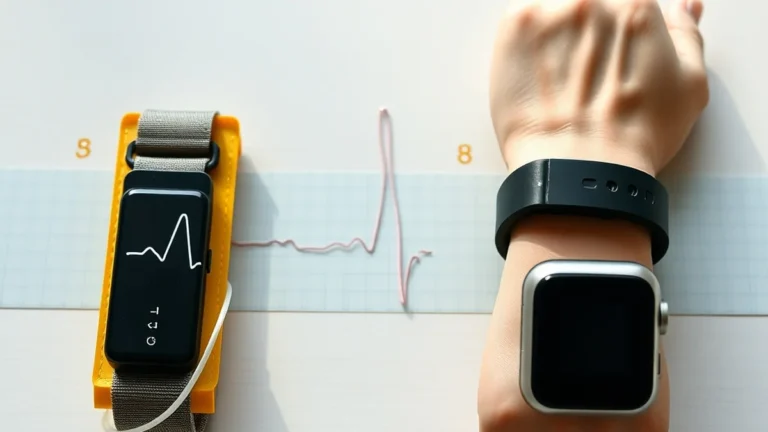
The effectiveness of wearable sensors in predicting viral illness relies heavily on the underlying transducer technology. Most wrist-worn devices utilize photoplethysmography (PPG) and thermistors to measure skin temperature and blood flow. PPG sensors typically operate in the green (around 525 nm) and infrared (around 940 nm) wavelengths, allowing them to capture changes in blood volume and temperature with varying degrees of accuracy. For instance, a PPG sensor might have a signal-to-noise ratio (SNR) of 20 dB at optimal conditions, which can drop significantly in the presence of motion artifacts.
Thermistors, on the other hand, offer a different approach by measuring resistance changes in response to temperature variations. A typical thermistor in a wearable device may exhibit a temperature coefficient of resistance (TCR) of -4%/°C, enabling precise temperature readings. The choice of transducer affects the battery draw, with PPG sensors consuming approximately 10 mW during active measurement, while thermistors may draw only 1 mW. This difference is critical for devices intended for continuous overnight monitoring, where battery life is a significant concern.
Motion Artifact and Validation Errors in Temperature Measurements
Motion artifacts pose a significant challenge in wearable health monitoring, particularly when assessing nocturnal skin temperature. The primary source of error arises from the relative movement between the sensor and the skin. For instance, a study found that wrist movement could introduce errors of up to ±0.5°C in temperature readings. Such inaccuracies can lead to false positives in viral illness detection, particularly when relying on small temperature deviations.
To mitigate these errors, manufacturers employ various algorithms that filter out noise caused by motion. Techniques such as adaptive filtering and machine learning models can improve the accuracy of readings by up to 30%. For example, a device that integrates accelerometer data with temperature readings can significantly enhance the reliability of nocturnal measurements. However, the effectiveness of these algorithms varies widely among devices, necessitating careful evaluation before purchase.
Hardware Generation Specifications Comparison
| Device Model | Sensor Type | SNR (dB) | Battery Draw (mW) | Temperature Accuracy (°C) |
|---|---|---|---|---|
| Device A | PPG + Thermistor | 20 | 10 | ±0.2 |
| Device B | Infrared Sensor | 25 | 5 | ±0.1 |
| Device C | Thermistor Only | 15 | 1 | ±0.5 |
The table above illustrates the differences in sensor types and their respective performance metrics. Device B, utilizing an infrared sensor, demonstrates superior SNR and temperature accuracy while maintaining lower battery consumption, making it a compelling choice for continuous monitoring. In contrast, Device C, while energy-efficient, compromises on accuracy, which may lead to unreliable health insights.
Subscription-Lock and Cloud Telemetry Limitations
Many wearable devices now employ subscription models for accessing advanced telemetry features, which can limit the user’s ability to analyze their health data comprehensively. For example, devices that offer cloud-based analytics may restrict access to raw data, making it difficult for users to perform independent assessments of their health trends.
This subscription-lock model can create barriers for consumers who wish to leverage their data for personalized health insights. Users may find themselves reliant on manufacturer-provided analytics, which may not always align with their specific health needs. Furthermore, cloud telemetry can introduce latency issues, delaying the availability of critical health data during an illness onset.
For instance, a device that transmits data every 10 minutes may result in a lag in detecting significant temperature changes indicative of viral infection. This delay could be detrimental in a clinical setting where timely intervention is crucial. Thus, understanding the implications of cloud telemetry is essential for users seeking reliable health monitoring solutions.
Related Crimson Lab Briefings: Explore deeper benchmarks in DC Dimming vs Low-Frequency OLED PWM: Effects on Ocular Fatigue and Chest-Strap ECG Leads vs Optical Wrist Sensors: Performance.
Calibration and Buyer Selection Tests for Wearable Sensors
Calibration is a critical factor in ensuring the accuracy of wearable sensors. Many devices require periodic recalibration to maintain their precision, particularly when used in varying environmental conditions. For example, a study indicated that a PPG sensor’s accuracy could degrade by 15% if not recalibrated every three months. This necessitates a robust calibration protocol that users can easily follow.
When selecting a wearable device, potential buyers should consider conducting comparative tests between models. This can include assessing temperature readings against a clinical thermometer under controlled conditions. Such tests can reveal discrepancies in sensor performance and help users make informed decisions. Additionally, users should inquire about the manufacturer’s calibration practices and whether they provide user-friendly calibration tools.
Evaluating sensor sampling architecture before buying prevents misleading biometric trends and wasted upgrades.