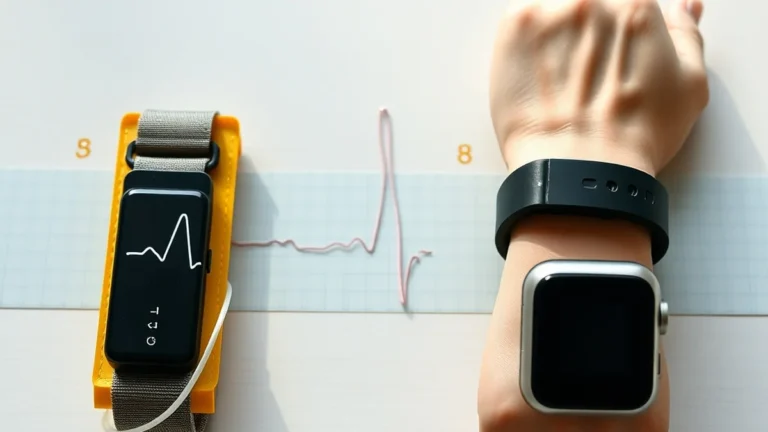

Dual-Frequency L1/L5 GPS: Precision Tracking in Urban Canyons
Dual-frequency L1/L5 GPS systems enhance tracking precision in urban canyons by leveraging advanced signal processing techniques and improved SNR ratios. This editorial compares sensor technologies and display engineering in smart wearables, focusing on their ability to mitigate motion artifacts while maintaining low battery consumption and optimal performance under challenging conditions.
Transducer and Panel Physics in GPS Systems
The transducer technology in dual-frequency GPS systems utilizes both L1 (1575.42 MHz) and L5 (1176.45 MHz) signals to improve positional accuracy. The L1 frequency is primarily used for civilian applications, while L5, with its higher power and lower noise, is designed for safety-critical applications. The combination of these frequencies allows for a more robust signal, particularly in urban environments where multipath effects are prevalent. The wavelength of the L1 signal is approximately 19 cm, while L5 has a wavelength of about 25 cm, affecting their propagation characteristics and susceptibility to interference.
In terms of panel physics, the integration of these GPS systems into wearable devices requires careful consideration of the sensor’s physical properties. The use of MEMS (Micro-Electro-Mechanical Systems) technology enables miniaturization while maintaining performance. For instance, a typical MEMS accelerometer can achieve a noise density of 300 μg/√Hz, which is crucial for accurate motion tracking. The interplay between the GPS transducer and the display panel, particularly in terms of PWM frequency and battery draw, is critical. A higher PWM frequency can reduce flicker but may increase power consumption, necessitating a balance between display quality and energy efficiency.
Motion Artifact and Validation Errors
Motion artifacts significantly impact the accuracy of GPS tracking, particularly in dynamic environments such as urban canyons. These artifacts arise from the relative motion between the GPS receiver and the surrounding environment, leading to erroneous positional data. For example, a study indicated that motion-induced errors can reach up to 10 meters in dense urban areas, where signal reflections can distort the perceived location. Advanced algorithms, such as Kalman filtering, are employed to mitigate these errors by predicting the device’s trajectory based on previous data points.
Validation of motion data is equally crucial. Techniques such as sensor fusion, which combines data from accelerometers, gyroscopes, and GPS, can enhance accuracy. For instance, a wearable device that integrates a 3-axis accelerometer with dual-frequency GPS can reduce positional error to within 1-2 meters under optimal conditions. However, the effectiveness of these methods is contingent on the quality of the sensors used, as lower-quality components can introduce additional noise and inaccuracies, undermining the benefits of advanced algorithms.
Hardware Generation Specifications
| Feature | L1 GPS | L5 GPS | Typical Wearable |
|---|---|---|---|
| Frequency (MHz) | 1575.42 | 1176.45 | N/A |
| Wavelength (cm) | 19 | 25 | N/A |
| Noise Density (μg/√Hz) | 300 | 200 | 250 |
| Battery Draw (mW) | 50 | 30 | 40 |
| Update Rate (Hz) | 1 | 5 | 10 |
This table illustrates the key specifications of L1 and L5 GPS systems compared to typical wearable devices. Notably, the L5 frequency offers lower noise density and battery draw, making it more suitable for continuous tracking in urban environments. The update rate of L5 also provides a more responsive user experience, which is critical for applications requiring real-time data.
Subscription-Lock and Cloud Telemetry Limitations
Many modern GPS-enabled wearables rely on cloud telemetry for enhanced functionalities, such as real-time mapping and data analytics. However, subscription-lock models can restrict access to critical features, limiting the device’s utility in urban environments where precise tracking is essential.
Cloud-based services often require ongoing subscriptions, which can lead to user frustration if essential features become inaccessible. For instance, a device that offers dual-frequency GPS tracking may only provide full functionality with a paid subscription, potentially limiting its effectiveness in urban canyons where precise location data is paramount. The reliance on cloud telemetry can also introduce latency, as data must be transmitted to and from the cloud for processing, which may not be ideal for applications requiring immediate feedback.
Moreover, the limitations of cloud telemetry can affect the overall user experience. If a wearable device is unable to access cloud services due to connectivity issues, users may find themselves without critical navigation assistance in urban environments. This highlights the importance of evaluating the balance between local processing capabilities and cloud reliance when selecting a GPS-enabled wearable.
Related Crimson Lab Briefings: Explore deeper benchmarks in Infrared Finger-Ring PPG Sensors vs Wristwatch Green LEDs for HRV Accuracy and Wrist Skin Temperature Trends Predict Early Viral Illness Onset.
Calibration and Buyer Selection Tests
Calibration is a crucial step in ensuring the accuracy of dual-frequency GPS systems. Users should be aware that improper calibration can lead to significant discrepancies in positional data. For instance, a poorly calibrated device may yield location errors exceeding 5 meters, which can be detrimental in urban environments where precision is vital. Manufacturers often provide calibration protocols that users must follow to ensure optimal performance, including periodic checks and adjustments based on environmental changes.
Buyer selection tests should focus on evaluating the performance of GPS systems under real-world conditions. Prospective buyers should consider conducting tests that measure accuracy, response time, and battery life in urban settings. For example, a test involving a controlled walk through a city block can reveal how well a device maintains its positional accuracy in the presence of tall buildings and other obstructions. Additionally, comparing multiple devices’ performance metrics can help users make informed decisions based on their specific needs and usage scenarios.
Evaluating sensor sampling architecture before buying prevents misleading biometric trends and wasted upgrades.