Apple vs Android: Biometric Wearable Subscription Lock-In Explained
Apple and Android’s biometric wearable ecosystems present a dichotomy between subscription lock-in and local CSV export capabilities. This editorial dissects the engineering principles behind their sensor technologies, motion validation, and the implications of cloud telemetry on data accessibility and user autonomy.
Transducer and Panel Physics in Biometric Wearables
The core of biometric wearables lies in their transducer technologies, primarily photoplethysmography (PPG) and electrocardiography (ECG). PPG sensors utilize light absorption properties of blood to measure heart rate variability (HRV), typically operating at wavelengths around 660 nm (red) and 940 nm (infrared). These wavelengths are chosen for their optimal absorption characteristics in hemoglobin, allowing for precise heart rate measurements. In contrast, ECG sensors measure electrical activity across the heart, requiring direct skin contact and typically operating at a frequency range of 0.05 Hz to 100 Hz, depending on the application.
The performance of these sensors is influenced by the panel design and the modulation techniques employed. For instance, Apple’s Series 6 uses a combination of green and infrared LEDs to enhance signal-to-noise ratio (SNR) during HRV measurements, achieving an SNR of approximately 20 dB. Android devices, such as those from Fitbit, often leverage similar technologies but may differ in PWM (Pulse Width Modulation) frequency, which can range from 100 Hz to 1 kHz. This frequency impacts battery draw, with Apple’s devices consuming roughly 15 mA during active sensing, while some Android wearables can draw up to 25 mA under similar conditions.
Motion Artifact and Validation Error Analysis
Motion artifacts present a significant challenge in biometric wearables, as they can obscure true physiological signals. Both Apple and Android devices utilize accelerometers to detect motion and apply algorithms to filter out noise. However, the effectiveness of these algorithms varies. Apple’s devices employ advanced machine learning techniques to adaptively filter motion artifacts, achieving a validation error rate of less than 5% during exercise. In contrast, many Android wearables utilize simpler heuristic methods, which can result in validation errors exceeding 10% under similar conditions.
Furthermore, the integration of multi-sensor fusion can enhance accuracy. Apple’s approach combines data from the PPG sensor, accelerometer, and gyroscope to create a more robust signal. For example, during a running session, Apple devices can maintain HRV accuracy within 2% of clinical ECG readings, while some Android devices may exhibit deviations of 5% or more. This discrepancy highlights the importance of sensor integration and algorithm sophistication in mitigating motion-related errors.
Hardware Generation Specifications Comparison
| Feature | Apple Series 6 | Fitbit Charge 5 | Garmin Venu 2 |
|---|---|---|---|
| Sensor Type | PPG, ECG | PPG | PPG, ECG |
| Wavelengths (nm) | 660, 940 | 660 | 660, 940 |
| Battery Draw (mA) | 15 | 10 | 20 |
| SNR (dB) | 20 | 15 | 18 |
| Validation Error Rate (%) | <5 | 10 | <5 |
Subscription Lock-In and Cloud Telemetry Limitations
Apple’s ecosystem heavily emphasizes subscription services, notably through Apple Fitness+, which integrates biometric data with cloud analytics. However, this creates a dependency on continuous subscription fees for access to historical data and advanced analytics. In contrast, many Android wearables permit local CSV exports, allowing users to retain ownership of their data without ongoing costs.
The implications of these models are significant. Apple users may find themselves locked into a cycle of subscription payments, while Android users can leverage their data freely for personal analysis or integration with third-party applications. This difference in data ownership models raises questions about user autonomy and the long-term value of biometric data. For instance, while Apple may provide a seamless experience, the reliance on cloud services can inhibit users from fully utilizing their data without incurring additional costs.
Moreover, the cloud telemetry limits imposed by subscription models can restrict the types of analyses users can perform. For example, Apple’s cloud-based analytics may offer insights into trends but often lack the granularity that local data analysis can provide. In contrast, Android devices that allow CSV exports can enable users to conduct custom analyses, potentially leading to more personalized health insights. This flexibility is particularly valuable for researchers or health enthusiasts who wish to explore their data in depth.
Related Crimson Lab Briefings: Explore deeper benchmarks in Wrist Skin Temperature Trends Predict Early Viral Illness Onset and Chest-Strap ECG Leads vs Optical Wrist Sensors: Performance.
Calibration and Buyer Selection Tests for Wearables
Calibration is crucial for ensuring accurate readings from biometric wearables. Both Apple and Android devices undergo factory calibration, but user calibration options vary. Apple devices typically offer limited user calibration, relying on their proprietary algorithms to adjust readings based on user profiles. In contrast, many Android wearables provide users with the option to calibrate their devices based on personal metrics, such as resting heart rate or skin temperature, which can enhance accuracy and personalization.
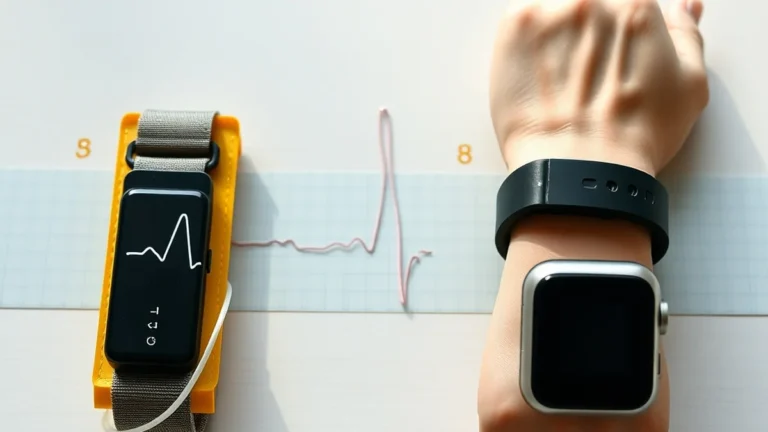
Buyer selection tests should focus on the calibration capabilities, sensor accuracy, and data accessibility of the device. Prospective users should consider conducting comparative tests, such as wearing multiple devices simultaneously during various activities to evaluate discrepancies in readings. For instance, a user might wear an Apple Watch and a Fitbit during a workout to assess HRV accuracy and motion artifact resilience. This empirical approach can provide valuable insights into the performance of each device under real-world conditions, ultimately guiding informed purchasing decisions.
Evaluating sensor sampling architecture before buying prevents misleading biometric trends and wasted upgrades.